Friday, 18 May 2018

A Cause Worth Dying For

I have recently been doing some reading on mission, in particular The Message Of Mission in the BST series by Howard Peskett and Vinoth Ramachandra which is an excellent book. The book is really a series of expository thoughts on key passages in the bible about mission.

One of the chapters contained a quote from John Hick's A Rainbow Of Faiths "Absolutism in religion, preaching the superiority of ones own tradition over against others, continues to motivate young men to be willing to kill and be killed for what they regard as a sacred cause." (pg. 61 of The Message Of Mission.)

That fits in well with todays message doesn't it? If only Islamic extremism wasn't so...well extreme. If only evangelicals weren't so dogmatic, if only everyone could recognise that every religion has elements of truth in them and blend the religions together then the world would be a much happier, much less violent place.

The only problem with that is that none of the world religions leave that option open to us, all of the major world religions make some ultimate truth claim or other. For example Muslims quote that Allah is one he neither begets nor is he begotten. (Qur'an 112)

Straight away this puts Muslims at odds with Christians who teach that Jesus Christ is the Son of God, logically God cannot both not beget and be the Father of Jesus Christ. Jesus Christ himself teaches that "I am the way, the truth and the life and that no man comes to the father but through Him." (John 14:6)

Blending all of the religions together is not simply an option that the religions themselves leave open to us. Yet what about this statement that it is religious dogma that motivates young men to kill and be killed? As we look through history we see religious wars being fought, the crusades of Christian church and the advance of Islam in Europe.

Christianity is at its heart a message of peace, peace with God and peace with one another. We see that as he was being betrayed Peter drew his sword and cut off a servants ear. Jesus response was to calm Peter and his revolutionary spirit and to heal the servant.

At times the church has lost sight of this truth and has used millitary might to advance the kingdom of God yet that was not what Jesus has in mind for the church. Rather we are always to be resident aliens in a strange land.

The gospel is a message of peace but it is also a message of self denial and even willing death. Jesus as the crowds where coming to him said "If anyone wants to come after me let him take up his cross and follow me. (Luke 9:23)

The call to carry a cross is not some insignificant travail that we have to endure in this life, the call to carry a cross is a call to come and die. Young men and women have gladly laid down their lives from the earliest days of the church right through to today? Why precisely because they believe the truth of Jesus Christ, Jesus Christ as the only way to God are worth laying down their lives for.

Far from being something to be avoided we should seek to arrive at the truth because it is the truth that shall set you free.

Tuesday, 15 May 2018

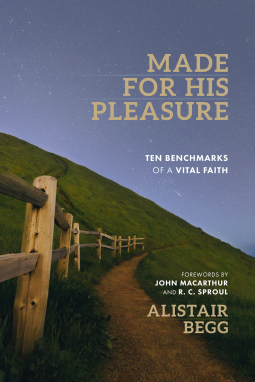
Book Review: Made For His Pleasure by Alistair Begg

I loved this book...could not put it down. The book has a fairly basic premise but one that we would all agree with that in our lives we are made to enjoy the pleasure of God.

In 10 chapters the author highlights various ways we can enjoy the good things that God has made for us and how we can glorify God in all of the good gifts that he gives to us. These chapters cover a surprising array of topics such as sports, prayer, relationships vocation and suffering.

One of the great things about this book is that it need not be read sequentially if you want to do that (and I did) then thats great but at the same time its easy to dip into a chapter about sport leave the book and come back and pick up at perhaps chapter 10.

The whole book ties together but each chapter also stands on its own. I loved the stories that the author intertwined throughout the chapters reflecting his own experiences and also of people whom he knew this really helped show how the chapters and topics might apply to your life.

I would recommend this book to all Christians, the author also states that he hopes some non Christians would enjoy reading it and whilst I think they would in our day which lacks peace and pleasure, or often seeks them in the wrong places. I don't think too many of them would read this book. But get this book read it you won't regret it and hopefully by the end of it you will truly see what it is to live to God's pleasure and to take every thought and activity captive to God.

I am grateful to Moody Publishers and net galley.com for generously making this book available to me for review.

Saturday, 12 May 2018

Free Books...Well Kind Of

I only discovered this resource recently but it is brilliant. It is a website called netgalley which provides advance copies of books for review by professional readers. When I read this I was a bit skeptical as I dont consider myself a professional reader but registered none the less and was pleasantly surprised when I was approved.

Sounds too good to be true right? Thats what I thought but it really is as simple as that. Maybe the question in your mind now though is what books can I get? Well to be perfectly honest there are plenty of books on there.

This year I have read for free:

Steve Lawson- The Moment Of Truth
Jonny Bairstow- A Clear Blue Sky
Mark Dever- The Affectionate Theology Of Richard Sibbes
John Macarthur- Good News.

My advice would be the register on net galley.com as opposed to net galley.co.uk as publishers such as Crossway and P & R publish on the .com website but not on the .co.uk website. If like me you love reading then this resource is for you, books you would read anyway but at a fraction of the cost.

Friday, 11 May 2018

Book Review: The Minister And The Murderer by Stuart Kelly

The Minister and the Murderer: A Book of AftermathsI have been intrigued by this book for a long time before I actually stumped up the cold hard £12 to buy an electronic version of it. This book covers an interesting part of the Church Of Scotland's history telling the story of James Nelson a murderer who was seeking ordination as a minister of the church.

The author had clearly done his research in terms of church polity and whilst not everyone's cup of tea chapters on things such as the Barrier Act did make interesting reading for me. As an ordained minister who sits on a presbytery now this book did challenge me as to what I/We would do in a similar situation. Some in the church felt this his crime was beyond the pale whilst others felt that forgiveness was the heart of the gospel and that forgiveness should be extended to all.

I have to say that throughout I felt myself siding with Nelson that as Oscar Wilde said "every saint has a past and every sinner has a future. Not all in the church saw it that way and for many that attitude still exists even today. A parishioner often tells me "the LORD may forgive you for what you have done but the church won't." This book is a good introduction to many things, Scottish Ecclesiastical History, Church Polity and it does make one question the nature of forgiveness.

However there were some drawbacks to the book, firstly the book did come across as someone setting out to prove how intelligent they were and how well read they were. This came across with the authors constant harking back to how murder was perceived and portrayed in various ancient texts which the ordinary reader (me most of all) are unfamiliar with.

Secondly I found the authors constant looking to attribute various things to Nelson as infuriating. I wonder the author often quotes if this was on Nelson's mind as he did a deed or said a thing. Whilst this may be interesting it is ultimately futile as we will never know what was on Nelson's mind.

Thirdly whilst the author is clearly well read in theology and able to engage in discussion one of the most disheartening things was a fundamental misunderstanding of the gospel of Jesus Christ. He states that Nelson's Christianity had not made him a better person, whilst this may be true that is not the nature of the gospel or the nature of our redemption.

Christ did not come to make us better people, Christ came to bring us to God, Christ came not because we were people of great potential but precisely because we had no hope. Nelson's Christianity may not have made him a better person but it did if his faith was truly in Jesus Christ change his standing before God.

Read this book for its interesting subject matter it is not an easy read but it is a fascinating read.

Monday, 31 July 2017

In The Days Of Rain- Rebecca Stott


Reading the paper on Friday I came across an interview with Rebecca Stott in which she was discussing this book. The headline caught my eye because it was about an escape from a cult and being a minister well I am always fascinated by these sorts of things.
In the Days of Rain by [Stott, Rebecca]

As I read the interview became apparent that the cult she was referring to was in fact the Plymouth Brethren of which her father had at one time been a leading light. Intrigued I bought the book and read it in just over a day.

The first thing to say is that this book is incredibly well written, the author has a clear engaging style and short chapters which draw you in and make you want to read more and more.

From a Christian perspective this book was also helpful because in the book she details the separation the Plymouth Brethren were supposed to have from the rest of the world. She details the difficulties that this caused her when she went to school, she says for instance she had no idea how to talk to the other children, she felt that she spoke a different language to them. She spoke of the rapture of being left behind and most of them had no idea what these things meant.

As churches it is very easy to fall into the same pattern, that we speak of things that we all understand and yet nobody on the outside has any idea what we are talking about, when we speak of sin, repentance, when we speak of eschatology and soteriology. We can be guilty of speaking Christian-ese which only those on the inside understand.

As we do this more and more not only do we become unintelligible to the world outside but we forget how to speak to the world in terms that they can easily understand and so our gospel communication becomes less and less effective.

The book also highlights the harm that can be done when things go wrong in churches. Her father after being hurt by the brethren church eventually abandoned his confession of Christ and would lurch from disaster to disaster after that.

Church history is littered with examples of people who have been hurt by churches, who have been let down by Christian ministers and sadly that pattern has repeated itself, it goes from walking away from a church to abandoning a profession altogether. How we need to be temperate and considered in the words we use with one another and think before we speak.

However there are some problems with the book and some clear points of view that are being relentlessly expressed. The first main problem is that time and again she refers to the brethren church she grew up in as a cult. This may well be true however at no point in the book does Stott identify what a cult is, what the accepted academic definition of a cult is. It is just boldly asserted that this assembly was a cult.

The second issue I had with the book was the relentless feminist agenda that the book was pushing, why doesn't God speak through women? Why did the women have to sit at the back of the assembly and be quiet?

I have no problem with feminism as such, women pray in our prayer meeting, ladies present the items of praise we sing on a Sunday during worship. I hope the women in our church feel welcomed and valued because they most certainly are.

However in Stott's book it is in my view a radical feminism that is advanced. One excerpt stood as particularly demonstrative to me of Stott's line of thinking "One day when my daughters were a bit older, I told myself, I'd talk to them about that, about patriarchy and how dangerous unchecked male power can be." (Pg. 101)

Any form of unchecked power is dangerous not just unchecked male power, unchecked female power would be just as dangerous, we live in a system that recognises that, we have checks and balances in our legislative system, in our church we have several courts that can be appealed to.

This speaks of a broader problem in society that when people say what they want is equality that is not what they mean, what they mean is they want preferential treatment, they want to be treated better than others. We see this with the radical feminist agenda, with the LGBT groups and to be fair with Christian lobby groups as well.

In short would i recommend that you read this book? Absolutely it is a fantastic book offering a grown up secular insight into a religious group. Read it however with your eyes open and read it remembering 1st Corinthians 1 that the wisdom of God is foolishness to those who are perishing.

Time and again you get the impression that this intelligent women could not understand the things that happened as she was growing up and why is that? Because these things, rightly applied and understood, were revealed by God not by human wisdom.

https://www.amazon.co.uk/Days-Rain-Rebecca-Stott-ebook/dp/B01N5BS5JD/ref=sr_1_1?s=digital-text&ie=UTF8&qid=1501511371&sr=1-1&keywords=In+the+days+of+rain

Saturday, 18 June 2016

A Text Without a Context is a pretext for a proof text

We have all done it...we all have them those favourite verses, those verses that seem to speak to us, those verses that resonate with where we are, those verses that at any one time God seems to be using to speak to us.


Yet how often do we stop to consider the context of these verses? If we did would these verses continue to bring us such encouragement, such joy and pleasure?


The most obvious example that springs to mind is Jeremiah 29:11


"For I know the plans I have for you, declares the Lord, plans for welfare[b] and not for evil, to give you a future and a hope." (ESV)


A verse which on the surface of things seems to bring comfort to a people in exile, a verse which speaks of the goodness of God to his people. And in some senses it is that, but is that all it is? Well no, the whole of chapter 29 speaks of a return from exile that is conditioned on the people turning to God, seeking him with their whole heart.However there is also a note of judgement in this chapter because God will judge the kings in the line of David, verse 17 doesn't seem as encouraging as verse 11 does it, 

‘Thus says the Lord of hosts, behold, I am sending on them sword, famine, and pestilence, and I will make them like vile figs that are so rotten they cannot be eaten. 18 I will pursue them with sword, famine, and pestilence, and will make them a horror to all the kingdoms of the earth, to be a curse, a terror, a hissing, and a reproach among all the nations where I have driven them,19 because they did not pay attention to my words, declares the Lord, that I persistently sent to you by my servants the prophets, but you would not listen, declares the Lord.’ (ESV)

Yet this is from the same passage from the same letter from the same book of the bible. It has to be said that verse 17 is in some senses the outworking of verse 11, that this sword, pestilence and famine are all part of the plans that LORD has for them. The plans in the immediate future may not be pleasant, may not be welcome but ultimately it is for the peoples good.


We consider another famous example from 2 Chronicles 7:14if my people who are called by my name humble themselves, and pray and seek my face and turn from their wicked ways, then I will hear from heaven and will forgive their sin and heal their land. (ESV)


Without looking tell me the context? The context is the finishing of the building of God's temple, the glory of the LORD coming and dwelling in the temple. The idea is of the consecration of the temple as the place where God's presence would be physically.For us today to simply take this and use it as a call to prayer probably isn't appropriate, unless of course we happen to be in the temple. 


For us to apply either of these two passage to us directly without first going through the lens of Jesus Christ isn't right. Only when we see that Christ is where we meet with God today do we understand 2 Chronicles 7, only when we see that in Christ our sin has been forgiven will we understand 2 Chronicles 7, only when we see Christ and has painful death can we truly appreciate the plans that the LORD has for us.


Yet the question may be so what? Why does this matter? Well it matters because if we pursue this practice of taking texts out of context it makes it very easy to make the bible say things that the bible doesn't say.


Think about 1st Corinthians 7:1

Now concerning the matters about which you wrote: “It is good for a man not to have sexual relations with a woman (ESV)


Without the context we could argue that Paul is actually advancing homosexuality,, celibacy or any number of things, the context shows us that actually what Paul is arguing for is marriage between one and and one woman because of the danger to sin.Now what am I saying? Don't have favourite verses? Don't have verses that encourage you in difficult times absolutely not but what Im saying is remember that those verses have a context, a situation into which they were written originally, remember that and don't jump to it being all about me.

Sunday, 31 January 2016

Who Can You Trust?

There was a report in The Times last week about what occupations people trust the most, surprisingly hairdressers came out on top as the most trusted occupation, perhaps less surprisingly estate agents and lawyers faired less well in the poll.

However the interesting thing for me was that for the first time ever scientists were more trusted than members of the clergy. So what you may think but actually it is a pretty big deal weather we realise it or not.

Firstly it seems staggering to me that the clergy have gotten a reputation as people who dont tell the truth, as people who can't be trusted. There are a lot of things feeding into this I suspect, growing secularism means that the clergy no longer have the place they once had and things like the child sexual abuse scandal have understandably eroded people's trust in the clergy.

However what impact does this have when we stand up to preach? If people in the pew are wondering if this man is trustworthy then how will our message be received? At best it will be received as well that was nice but can you trust it? At worst....it will be received as a lie. If thats what the people in the pew who know us think imagine what the outsider will think of us.

Secondly and more worryingly for me is the impact this has when people like Richard Dawkins speak on issues of religion and morality in the media. We may not care to accept it but yet more people trust scientists than trust ministers, so if Dawkins or Brian Cox comes out and says something more people are ready to believe it than not. This then feeds into the idea that science is the only infallible discipline in the universe, only when science has explained something do we fully understand it.

So what are we going to do? Well primarily ministers have to become known again as people who can be relied upon to tell the truth, people who can be trusted. Only when we have regained the public trust can we start to fight the war. Until that point the perception will be that you can't trust ministers and what they say. Let us as Christians learn to live increasingly sanctified God glorifying lives.